Energy30 May 2025
Caspian Pipeline Consortium (CPC): Strategic Backbone of Kazakhstan’s Crude Oil Exports and Its Geopolitical Implications
The Caspian Pipeline Consortium (CPC) is a vital conduit for Kazakhstan’s crude oil exports, extending over 1,500 kilometers from the Tengiz oil field in western Kazakhstan…
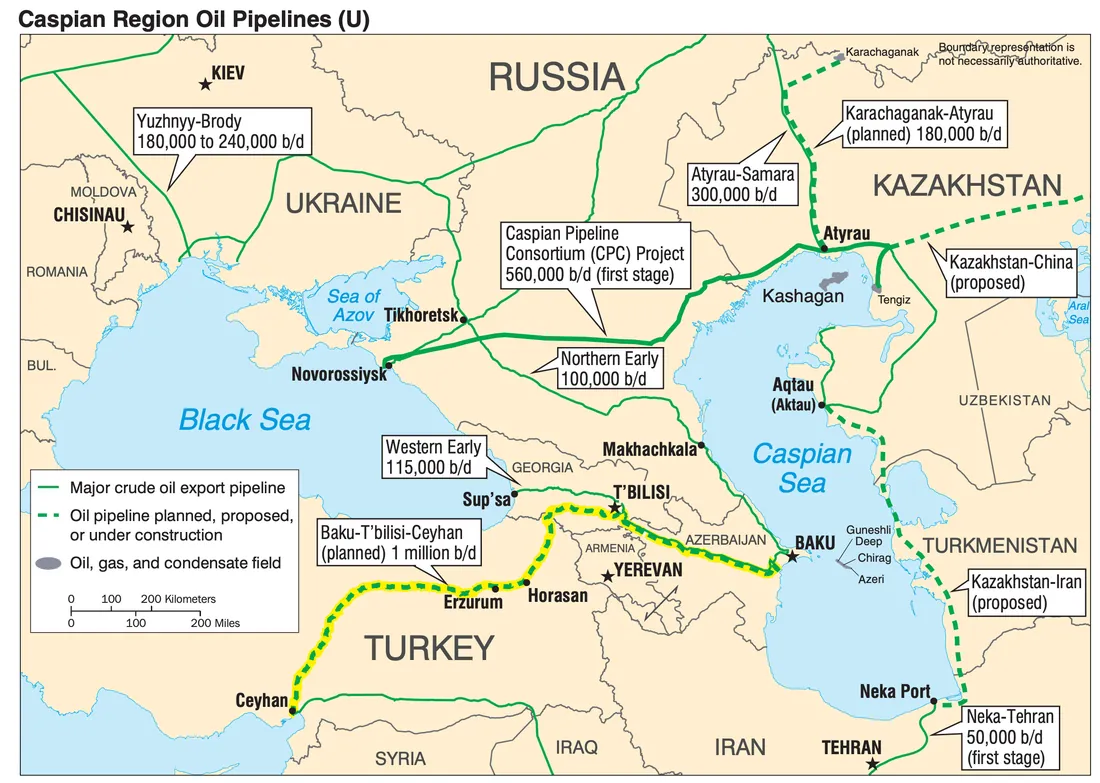
The Caspian Pipeline Consortium (CPC) is a vital conduit for Kazakhstan’s crude oil exports, extending over 1,500 kilometers from the Tengiz oil field in western Kazakhstan to the Russian port of Novorossiysk on the Black Sea. Commissioned in 2001, the pipeline is a cornerstone of Kazakhstan’s economic infrastructure, enabling it to export approximately 80% of its crude oil production. With a throughput of over 1.4 million barrels per day, the CPC contributes significantly to global oil supply, representing about 1% of daily global consumption.
Ownership and Governance Structure
CPC is a unique public-private partnership with a multinational ownership structure. It is governed through two legal entities: CPC-Kazakhstan and CPC-Russia, both registered in Bermuda. Major stakeholders include Russia’s Transneft (24%), Kazakhstan’s KazMunayGas (19%), and global energy giants such as Chevron, ExxonMobil, and Shell. This diverse ownership base enables the pipeline to benefit from international best practices in engineering, finance, and operations, while also navigating complex geopolitical relationships.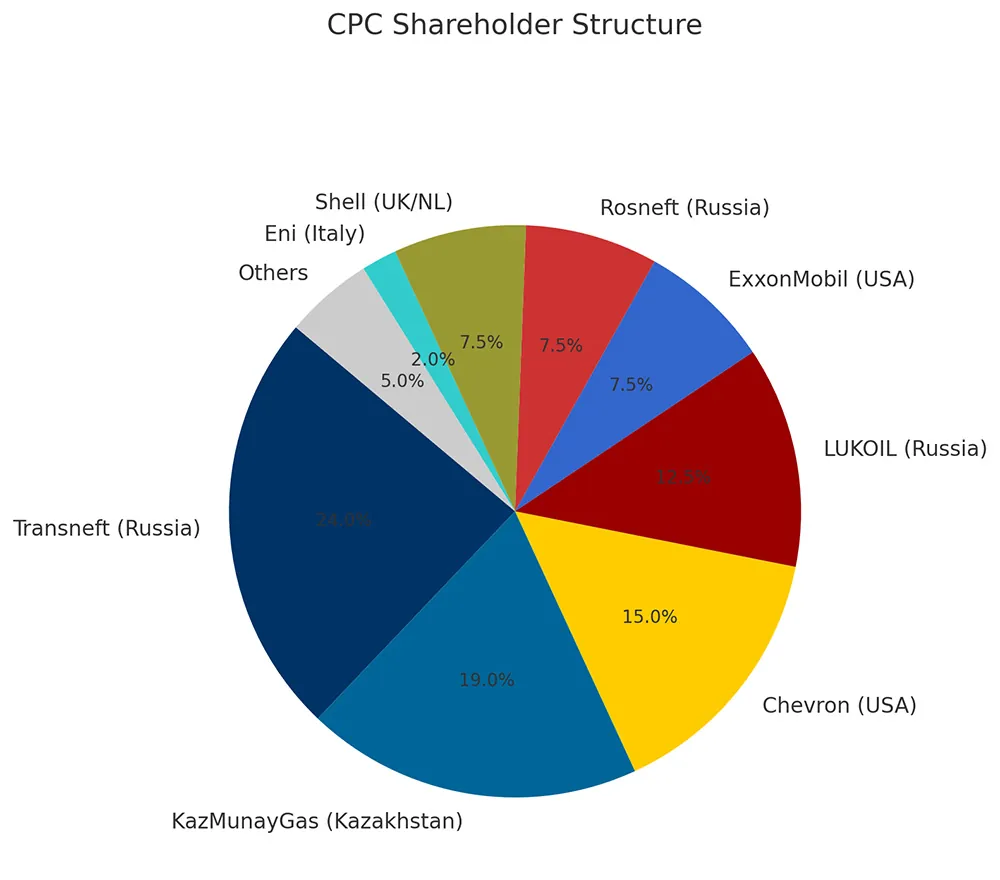
Technical Capacity and Infrastructure
Spanning 1,510 kilometers, the CPC pipeline consists of various components including multiple pump stations and a marine terminal with three Single Point Mooring (SPM) buoys. The pipeline was initially designed for a capacity of 350,000 barrels per day but has been expanded to accommodate up to 1.4 million barrels per day, with future expansion potential to 83 million tons annually. These capabilities make it a critical export route for Kazakhstan’s landlocked oil resources.Kazakhstan's Strategic Dependence on CPC
Kazakhstan is highly dependent on the CPC for its oil exports, with over 80% of its crude routed through the pipeline. As a landlocked country, Kazakhstan lacks direct access to global shipping lanes, making CPC indispensable for reaching international markets. Alternative export routes such as the Kazakhstan-China pipeline or the Druzhba pipeline to Europe offer only limited capacity and reach, underscoring CPC's unmatched strategic value.CPC's Role in Global Oil Markets
The CPC pipeline is not only vital for Kazakhstan but also plays a significant role in global oil stability. At peak capacity, it transports nearly 1.4 million barrels per day to global markets, supplying major economies in Europe and Asia. This volume is sufficient to influence global oil prices and mitigate supply disruptions, positioning CPC as a stabilizing force in international energy markets.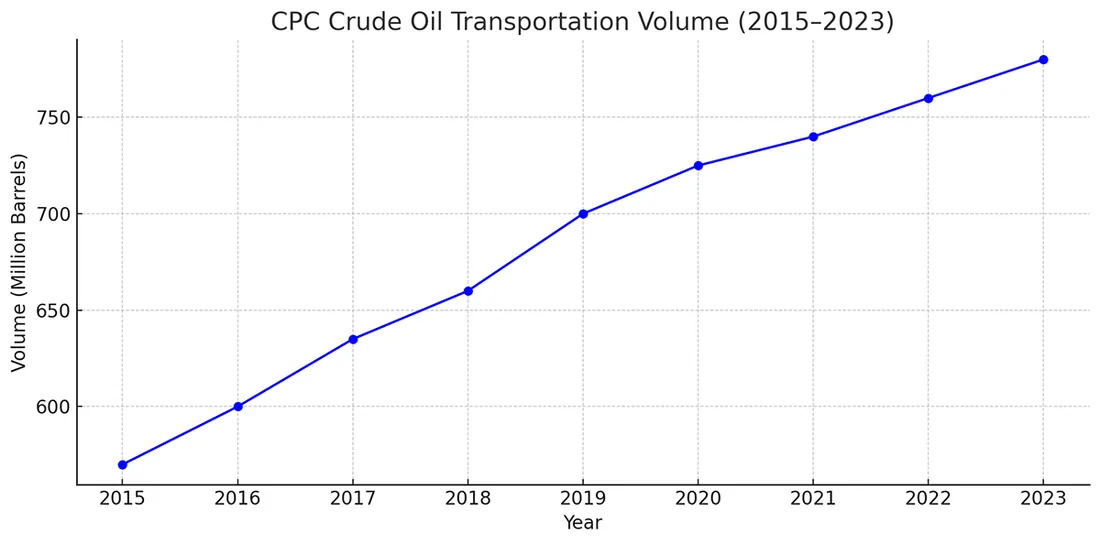
The Black Sea: Strategic Maritime Corridor for CPC Exports
The Black Sea plays a crucial logistical role in the CPC system, serving as the maritime gateway through which Kazakh crude reaches global markets. From the Novorossiysk terminal, oil is loaded onto tankers that navigate through the Bosphorus and Dardanelles Straits, linking the Black Sea to the Mediterranean and beyond. This route allows access to European, Middle Eastern, and Asian ports, including Rotterdam, Fujairah, and Jurong. However, its strategic significance is also a vulnerability; geopolitical tensions in the Black Sea region, such as conflicts or naval blockades, could severely disrupt the CPC’s export continuity. Thus, maritime security in the Black Sea is essential for the sustained reliability of CPC’s operations.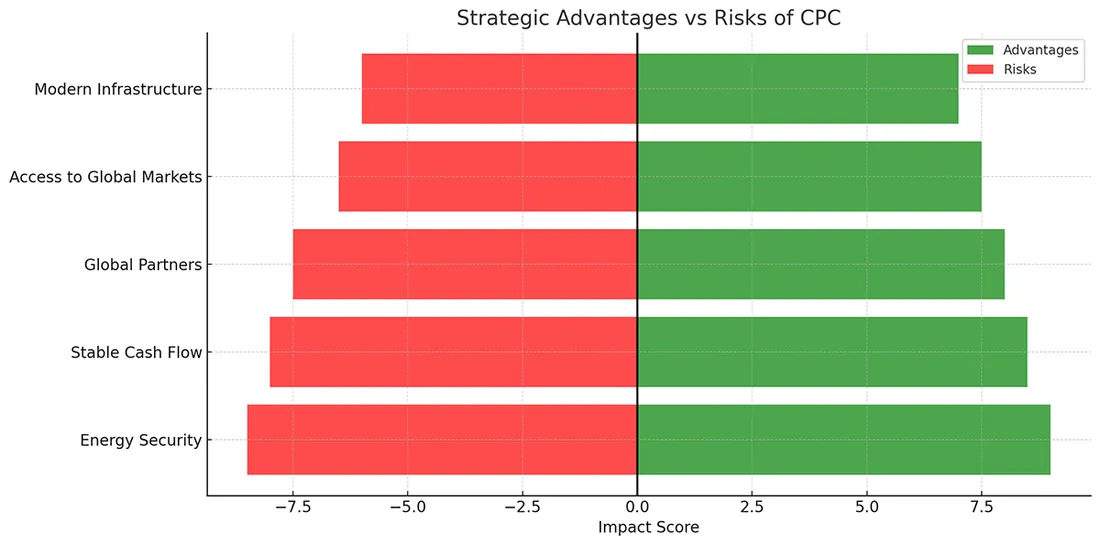
Sanctions Circumvention and Refined Fuel Transit
Due to Western sanctions on Russian refined fuels, a notable portion of products such as EN 590 diesel (10 ppm), Jet A1 aviation fuel, and D6 fuel oil are being routed through Kazakhstan and reclassified as Kazakh-origin. These products are then exported to terminals in Rotterdam, Fujairah, Houston, and Jurong, bypassing sanctions via altered documentation. This practice, while financially beneficial, raises questions of regulatory compliance and geopolitical risk.Kazakhstan’s Refining Limitations
Despite being a critical transit point, Kazakhstan lacks the domestic refining capacity to support high-volume exports of refined fuels. Its three main refineries—Atyrau, Shymkent, and Pavlodar—have a combined capacity of roughly 350,000 barrels per day and often operate below optimal levels. Consequently, much of the refined fuel labeled as "Kazakh-origin" is, in reality, of Russian origin, merely transiting through Kazakhstan to reach global markets.Future Outlook and Strategic Risks
The CPC faces both opportunities and threats. Expansion plans aim to increase capacity and possibly integrate digital monitoring and ESG practices. However, the pipeline’s reliance on Russian territory and infrastructure poses ongoing geopolitical risks. Disruptions such as sabotage, sanctions, or policy shifts in Russia could significantly impact operations. Kazakhstan must therefore diversify its export infrastructure and improve its refining capabilities to secure long-term resilience.The Caspian Pipeline Consortium is a linchpin of Kazakhstan's economy and a strategic asset in global oil logistics. While it enables large-scale crude exports, recent geopolitical developments have transformed it into a channel for potentially sanctioned Russian refined products. For Kazakhstan to elevate its role in global energy markets, it must invest in refining infrastructure, enhance regulatory transparency, and reduce dependency on transit routes subject to external political pressures.